
Best overall: HubSpot for sales-led client accounts. Best for ecommerce retention: Klaviyo. Best for agency account management: HighLevel. This 2026 guide compares the best marketing automation tools for growth agencies by the work each handles, the operating burden it creates and the business outcome you need to measure.
TL;DR
- HubSpot leads the best marketing automation tools for growth agencies when sales pipelines and marketing automation need shared records.
- Klaviyo fits ecommerce retention; Customer.io fits behavior-triggered messaging for technology products.
- HighLevel fits repeatable client account management; ActiveCampaign fits email-led lifecycle automation.
- Zapier connects systems, but does not replace your CRM, consent records or marketing strategy.
Why this matters
Automation makes a working process repeatable. It also makes a broken process repeat its mistakes faster. Before choosing software, decide whether your constraint is slow follow-up, weak segmentation, disconnected records or poor visibility into revenue.
At The fVnnel, we connect strategy, acquisition, creative, conversion and tracking as one growth system. The software decision belongs inside that system, not above it. A sophisticated workflow does nothing useful when it sends the wrong message or hands an unqualified inquiry to sales.
The fVnnel is best for established businesses that need marketing automation connected to acquisition, conversion and tracking. This guide is for agencies making that same operating decision across client accounts, not businesses still proving demand.
What makes the best marketing automation tools for growth agencies?
Use these criteria for your 2026 shortlist. A strong fit should make a specific client process easier to operate and explain.
- Business-model fit: Match the system to purchases, sales opportunities, appointments or product activity. These are different automation problems.
- Record ownership: Identify where customer details, consent and lifecycle stages live. Conflicting records create conflicting messages.
- Workflow control: Check entry conditions, branching, suppression and exit rules. A customer who converts should leave the prospect sequence.
- Agency operations: Test account separation, permissions, handover and repeatable setup. Your team needs boundaries between clients.
- Revenue visibility: Connect activity to completed purchases or sales outcomes. Opens and clicks describe engagement, not profit.
- Maintenance burden: Assign responsibility for failed connections, changed fields and obsolete workflows. Automation still needs an owner.
Do not choose on the length of the feature list. Choose on the most important process your team must run reliably, then check the adjacent requirements before committing.
Marketing automation tools at a glance
This 2026 comparison separates marketing platforms from account-management systems and integration software. Zapier appears because connections often belong in the solution, not because it replaces a marketing platform.
| Tool | Best for | Standout capability | Key limitation |
|---|---|---|---|
| HubSpot | Sales-led client accounts | CRM-connected marketing and sales workflows | Requires disciplined records and lifecycle definitions |
| ActiveCampaign | Email-led service businesses | Email automation with branching customer journeys | Does not replace cross-channel business reporting |
| Klaviyo | Ecommerce retention | Messaging built around customer and purchase activity | Commerce data quality determines segmentation quality |
| HighLevel | Repeatable agency account operations | Client subaccounts with CRM and follow-up workflows | Standardized setups still need client-specific controls |
| Customer.io | Product behavior messaging | Campaigns triggered by customer events | Depends on reliable event tracking and technical ownership |
| Zapier | Connecting separate applications | Trigger-and-action workflows across applications | Not a customer database or full marketing platform |
1. HubSpot: best marketing automation tool for sales-led accounts
HubSpot combines customer relationship management, or CRM, with marketing and sales tools. It fits accounts where marketing creates demand but a salesperson closes the business. A shared contact and company record gives both teams a common place to work.
Best for: Agencies supporting established businesses with a defined sales pipeline and a real handoff between marketing and sales.
Choose HubSpot when your question is not just which email someone receives next. It should also be which sales stage they belong in, who owns the follow-up and what happened after the inquiry. That requires agreement on definitions before you build workflows.
HubSpot pros:
- Connects marketing activity with CRM records.
- Supports workflow-based routing and follow-up.
- Brings sales and marketing processes into the same environment.
HubSpot cons:
- Poor lifecycle definitions spread across connected workflows.
- A broader platform creates more administration than a narrowly scoped email system.
During evaluation, trace an inquiry from form submission to closed outcome. Check duplicate handling, sales ownership and what happens when the contact becomes a customer. Do not accept a successful email send as proof that the process works.
Verdict: Buy HubSpot when shared sales and marketing records are the priority. Hold if your client has no agreed sales process.
2. ActiveCampaign: best marketing automation tool for email-led services
ActiveCampaign supports email marketing and automated customer journeys. Its automation builder lets teams use conditions and contact activity to determine what happens next. That suits service businesses where education, follow-up and re-engagement carry much of the lifecycle work.
Best for: Agencies managing email-led journeys for established service, education and expert-led businesses.
Choose ActiveCampaign when the central job is moving a known contact toward a meaningful next action. Map that action before writing the sequence: a qualified inquiry, completed booking or purchase is more useful than another opened email.
ActiveCampaign pros:
- Supports branching email journeys.
- Uses contact information and behavior for segmentation.
- Handles follow-up beyond a single broadcast campaign.
ActiveCampaign cons:
- Overlapping automations become difficult to audit without naming and ownership rules.
- Email activity alone does not explain acquisition profitability.
Test exclusions as carefully as entry rules. Existing customers, unqualified inquiries and contacts already speaking with sales should not automatically receive the same follow-up. Ask your operator to explain the journey without opening every individual workflow.
Verdict: Buy ActiveCampaign for email-led lifecycle work. Skip it as a substitute for business-wide reporting.
3. Klaviyo: best marketing automation tool for ecommerce retention
Klaviyo centers marketing activity on customer profiles and commerce behavior. Agencies can use purchase and browsing activity to shape segments and automated messages. That makes it a focused option when repeat purchase and customer retention are the assignment.
Best for: Agencies serving established ecommerce brands with usable product, order and customer data.
The important selection question is whether the business can supply trustworthy events and customer records. A purchase-triggered journey is only useful when the purchase arrives correctly and the customer receives the right follow-up.
Klaviyo pros:
- Connects messaging with commerce activity.
- Supports customer segmentation around purchase behavior.
- Fits post-purchase and re-engagement journeys.
Klaviyo cons:
- Incorrect catalog or event data creates incorrect messaging.
- Its commerce focus is less relevant when a salesperson owns the conversion.
Before rollout, review how refunds, canceled orders and existing customers affect your journeys. Also examine whether a message creates incremental demand or merely receives credit for a purchase already likely to happen. Report platform-attributed revenue separately from the business’s total sales and contribution margin.
Verdict: Buy Klaviyo for commerce-led retention. Skip it when the primary constraint is sales pipeline management.
4. HighLevel: best marketing automation tool for agency account operations
HighLevel combines client subaccounts with tools for CRM, follow-up and appointment-related workflows. Its agency account structure suits teams that need to operate similar processes across separate businesses. The attraction is repeatable delivery, not identical marketing for every client.
Best for: Agencies standardizing lead capture and follow-up across multiple client accounts.
Start with the workflow your agency actually repeats. If each client needs a different data model, buying journey and reporting structure, a reusable setup will need substantial adaptation. Do not confuse copying a workflow with validating it.
HighLevel pros:
- Separates client activity into subaccounts.
- Combines CRM records with follow-up workflows.
- Supports repeatable agency operating processes.
HighLevel cons:
- A copied setup can carry unsuitable assumptions into another account.
- Client ownership, access and handover need explicit operating rules.
Test a client exit as well as client onboarding. Establish who controls records, connected services and documentation. Your agency should be able to explain how a client continues operating without relying on undocumented knowledge held by a single team member.
Verdict: Buy HighLevel for repeatable multi-account delivery. Hold when client processes differ too much to standardize responsibly.
5. Customer.io: best marketing automation tool for product behavior
Customer.io supports messaging driven by customer attributes and events. An event is a recorded action, such as completing onboarding or using a product feature. This approach fits businesses where what customers do inside the product determines the next useful message.
Best for: Agencies working with technology companies that have technical ownership of customer event data.
Choose Customer.io when a static mailing list cannot describe the journey. Your team needs to know which actions matter, how they are recorded and what should happen when the action never arrives.
Customer.io pros:
- Supports event-triggered customer journeys.
- Connects segmentation with customer attributes and behavior.
- Fits onboarding and product engagement messaging.
Customer.io cons:
- Missing or inconsistent events undermine campaign logic.
- Implementation requires coordination with the people maintaining product tracking.
Request an event dictionary before designing campaigns. That document should explain what each event means, when it fires and who owns it. Without those definitions, two teams can use the same event name while assuming different customer behavior.
Verdict: Buy Customer.io for behavior-led product messaging. Wait if event tracking has no accountable owner.
6. Zapier: best automation tool for connecting separate applications
Zapier connects applications through trigger-and-action workflows. It can move information between systems or initiate a task when something happens elsewhere. It belongs beside your marketing platform when the main problem is a disconnected handoff.
Best for: Agencies connecting an existing CRM, forms, scheduling tools and operational applications.
Choose Zapier for a defined connection rather than as the default home for every business rule. Keep the customer record and lifecycle logic in a clearly identified system. Otherwise, your integration layer becomes an undocumented second marketing platform.
Zapier pros:
- Connects applications without making them the same system.
- Supports operational handoffs outside email marketing.
- Lets teams automate narrowly defined repetitive tasks.
Zapier cons:
- Changes to connected applications can require workflow maintenance.
- It does not replace consent management, CRM governance or marketing strategy.
Test failure handling before relying on a connection. Decide who receives an alert, how missed records are recovered and whether rerunning a task creates duplicates. A workflow that succeeds silently but fails invisibly is not ready for business-critical use.
Verdict: Buy Zapier to connect a defined process. Skip it as your central customer database.
How we ranked the tools
The 2026 order follows business-model fit, record ownership, workflow control, agency operations, revenue visibility and maintenance burden. It is a fit-based recommendation, not a claim that every platform underwent hands-on testing or that one tool wins every category.
HubSpot is the default for sales-led accounts because the CRM and handoff are central to that use case. The other tools earn distinct slots. Ecommerce retention, product messaging and agency account operations should not be forced into the same buying decision.
Check the process before you migrate
Use a short sequence to turn the shortlist into a practical decision. Keep the exercise focused on a real customer journey rather than a demonstration built around ideal data.
- Define the outcome: Name the completed business action the workflow should support.
- Map the record: Identify the authoritative customer record and consent source.
- Test the handoff: Follow a real scenario through conversion, exclusion and failure handling.
- Assign an owner: Give someone responsibility for updates, monitoring and documentation.
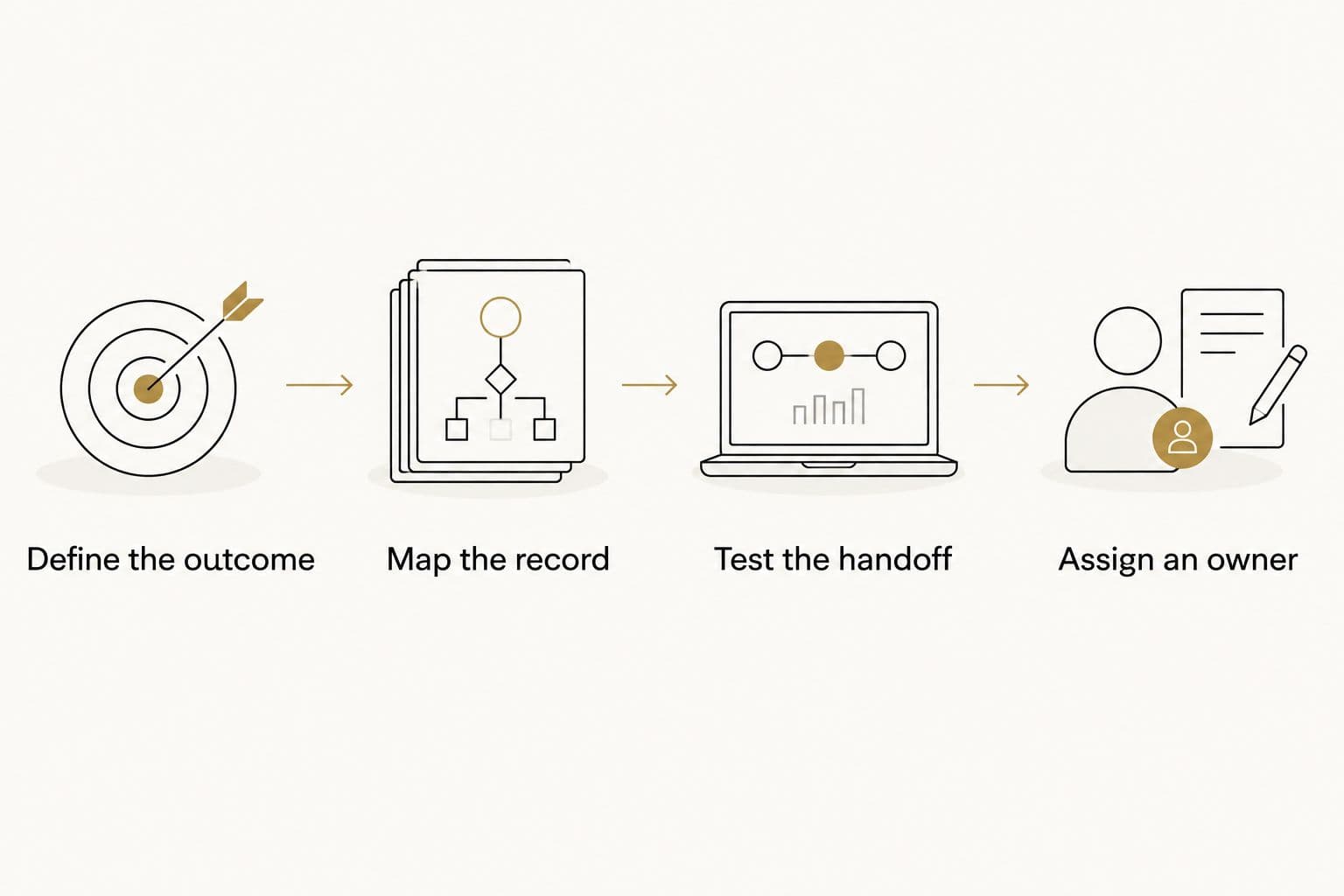
Choose the system after you define the customer journey and ownership.
The fVnnel’s growth work provides a useful commercial reference point: Sniffspot’s cost per host acquired fell 78%, with host growth roughly ninefold. Kidney Coach’s return on ad spend rose from 1.33 to over 3.8, while profit increased roughly 45% and ad spend fell nearly 40%. These are business results, not evidence that any platform in this list caused them.
Which marketing automation tool should you choose?
Start with HubSpot for a sales-led account, Klaviyo for ecommerce retention and HighLevel for standardized agency operations. Choose ActiveCampaign for email-led service journeys, Customer.io for product behavior and Zapier for connections between existing systems.
For your 2026 decision, pick the tool that resolves the current constraint without creating an ownership problem elsewhere. At The fVnnel, we treat marketing automation as part of acquisition, conversion and tracking, not a separate growth strategy.
FAQ
What’s the best marketing automation tool for a growth agency?
HubSpot is the default recommendation for growth agencies supporting sales-led client accounts. HighLevel fits repeatable agency account operations, while Klaviyo fits ecommerce retention.
Is HighLevel better than HubSpot for agencies?
HighLevel is the better fit when client subaccounts and repeatable agency operations drive the decision. HubSpot fits accounts where shared marketing and sales records are the central requirement.
Is Zapier a marketing automation platform?
Zapier is an application integration and workflow automation tool, not a replacement for a full marketing platform. Use it to connect systems while keeping customer records and lifecycle ownership clearly defined.
Should an ecommerce agency choose Klaviyo or ActiveCampaign?
Klaviyo is the more focused choice for journeys built around commerce activity and repeat purchases. ActiveCampaign fits email-led journeys where purchase data is not the organizing principle.
When should an agency choose Customer.io?
Choose Customer.io when product behavior should trigger customer messaging and a technical owner maintains the event data. Define the events and their meaning before building campaigns.
Can a growth agency use one automation tool for every client?
An agency can standardize its operating process without forcing every client onto the same platform. Choose tools around the client’s business model, customer records and conversion process.
What should we check before switching automation platforms?
Check record ownership, consent, workflow entry and exit rules, sales handoffs and failure handling before migrating. Assign responsibility for maintenance and confirm how client data will be handed over.
One last thing
Your most useful automation test is often the exit, not the entry. Complete the desired action and confirm that prospect follow-up stops. Then unsubscribe a test contact and check that connected systems respect the change.
That simple exercise exposes whether your workflow follows the customer’s actual state or merely continues sending messages. Fix that before adding another sequence.