
Best overall for appointment-led wellness studios: Acuity Scheduling. Best for class-based operations: Mindbody. Best for beauty and wellness service menus: Vagaro. Square Appointments is the payment-centered option, while Calendly fits consultation booking rather than full studio management. This 2026 guide ranks each by the workflow you need to run, not the longest feature list.
TL;DR
- Acuity Scheduling is the best appointment scheduling software for wellness studios focused on individual appointments.
- Mindbody fits class schedules; Vagaro fits beauty and wellness service menus.
- Square Appointments suits payment-centered operations; Calendly suits consultation booking.
- Choose around completed bookings, attendance and repeat visits, not calendar features alone.
Why this matters
A booking tool sits between customer interest and revenue. If customers cannot find the right service, understand the booking requirements or complete the reservation, better advertising does not fix that friction.
The fVnnel is a growth partner for established businesses, connecting strategy, acquisition, conversion and tracking. For wellness studios, the booking decision belongs inside that wider system: how customers arrive, what they book and whether they return.
The fVnnel’s recommendation for appointment-led wellness studios is Acuity Scheduling, with the final choice determined by your operating requirements. A class-led studio needs a different default. Start with the business model, then examine the software.
What makes the best appointment scheduling software for wellness studios?
Use these criteria before comparing vendors. For your 2026 shortlist, a useful feature is one that removes a real booking or operating constraint.
- Booking model: Individual treatments, group classes and introductory consultations require different scheduling rules.
- Customer journey: Customers should understand the service, practitioner, duration and booking requirements before committing.
- Staff and resources: Check how the system handles practitioners, rooms, equipment and overlapping availability.
- Payments and attendance: Examine deposits, payment collection, reminders and cancellation handling against your studio’s policies.
- Retention workflow: Check how customers rebook and how your team identifies people due to return.
- Measurement: Confirm how completed bookings connect to acquisition sources and business reporting.
Do not give every criterion equal weight. A shared treatment room can be a harder constraint than calendar appearance. A membership-led class studio has different requirements from a practitioner selling individual sessions.
Wellness scheduling software at a glance
This comparison ranks workflow fit, not universal feature superiority. Confirm current capabilities, integrations and contractual terms directly with each vendor before committing.
| Rank and option | Best for | Standout feature | Key limitation |
|---|---|---|---|
| 1. Acuity Scheduling | Appointment-led wellness studios | Appointment scheduling with intake forms | Not the default choice for class-led studio operations |
| 2. Mindbody | Class-based wellness businesses | Class scheduling and membership management | Broader operational scope than a simple booking calendar |
| 3. Vagaro | Beauty and wellness service menus | Service booking alongside business management | Requires careful service and practitioner setup |
| 4. Square Appointments | Payment-centered appointment businesses | Scheduling within Square’s payment ecosystem | Ecosystem fit does not establish wellness workflow fit |
| 5. Calendly | Introductory consultations | Availability-based meeting scheduling | Not a replacement for studio management software |
1. Acuity Scheduling: best for appointment-led wellness studios
Acuity Scheduling lets customers book appointments against your availability and supports intake forms. It belongs first on the shortlist when your core transaction is a customer reserving time with a practitioner.
That makes it a practical starting point for appointment-led massage, coaching and wellness services. Build the selection around the booking itself: selecting a service, choosing a practitioner and providing the information needed before attendance.
Acuity Scheduling pros:
- Appointment booking is its central purpose.
- Intake forms support collecting information before a session.
- Customer self-scheduling reduces the need to arrange every appointment manually.
Acuity Scheduling cons:
- Appointment fit alone does not establish suitability for class memberships or wider studio operations.
- Your team still needs to define services, availability and intake requirements clearly.
For your 2026 evaluation, enter a real service rather than a generic demonstration appointment. Check whether the customer understands what they are booking without calling reception. Then review the appointment from the practitioner’s side.
Best for: Established wellness studios whose main unit of sale is an individual appointment.
Verdict: Buy if individual appointments drive your business and your required workflows pass a live trial.
2. Mindbody: best for class-based wellness operations
Mindbody combines scheduling with tools for fitness and wellness business management, including classes and memberships. It is the stronger starting point when customers book places in sessions rather than only reserving practitioner time.
Class-led operations need a view of attendance, capacity and ongoing customer access. Treat those as operating requirements, not optional additions to an appointment calendar.
Mindbody pros:
- Class scheduling aligns with group-based services.
- Membership management supports recurring access models.
- Its wellness and fitness focus makes studio operations central to the evaluation.
Mindbody cons:
- Its broader scope creates more operating decisions than a narrow scheduling tool.
- Businesses selling only individual appointments should establish whether they need that scope.
Ask staff to demonstrate the full customer lifecycle: joining, booking a class, attending and returning. A polished booking screen is not enough if membership administration creates work elsewhere.
In a 2026 selection process, compare the work your team performs after each booking as closely as the customer-facing experience.
Best for: Wellness businesses where classes and memberships shape daily operations.
Verdict: Buy for class-led operations after validating membership and attendance workflows.
3. Vagaro: best for beauty and wellness service menus
Vagaro offers appointment scheduling and business management tools for beauty, fitness and wellness businesses. It deserves consideration when your booking journey revolves around a structured service menu and practitioner selection.
The important question is whether customers can distinguish the services they actually need. Software cannot resolve unclear treatment names or overlapping descriptions on your behalf.
Vagaro pros:
- Its service-business focus matches beauty and wellness appointment models.
- Online booking supports customer-led appointment selection.
- Business management tools sit alongside scheduling rather than treating every booking as a meeting.
Vagaro cons:
- Detailed service menus require disciplined setup and maintenance.
- Category fit does not prove suitability for your rooms, resources or reporting requirements.
Use your most confusing service category during the demonstration. Ask a person unfamiliar with the menu to choose a service and practitioner without assistance. Their questions expose information gaps your existing customers might already face.
Keep clinical requirements separate from general scheduling needs. Do not assume a wellness-oriented booking product satisfies requirements for handling regulated health information.
Best for: Beauty and wellness studios with service menus and practitioner-led bookings.
Verdict: Buy if your service menu and staff workflows work clearly in the trial.
4. Square Appointments: best for payment-centered operations
Square Appointments connects appointment scheduling with Square’s payment tools. It is a sensible shortlist entry when the relationship between booking, checkout and payment administration drives your decision.
Start with the transaction your team handles every day. Follow a customer from booking to attendance, payment and any subsequent change rather than evaluating the calendar in isolation.
Square Appointments pros:
- Appointment scheduling sits within an established payment ecosystem.
- Online booking supports customer self-service.
- Businesses already using Square can evaluate scheduling alongside familiar payment workflows.
Square Appointments cons:
- Familiar payment tools do not establish suitability for class or membership operations.
- Choosing around an existing payment setup can distract from practitioner and resource requirements.
For your 2026 review, have the person responsible for reconciliation join the demonstration. A booking system that works for reception must also produce records the finance team can use.
Do not choose it simply because you already use Square. Choose it when the combined booking and payment workflow fits the studio.
Best for: Appointment businesses that prioritize the connection between scheduling and payments.
Verdict: Buy when payment workflow is the deciding requirement and studio scheduling needs are satisfied.
5. Calendly: best for introductory consultations
Calendly schedules meetings using availability rules and booking links. It fits a narrower task: helping a prospective customer reserve a consultation or introductory conversation.
That is useful when your studio sells a considered service before scheduling delivery. It is not the same job as managing treatments, classes, memberships and studio resources.
Calendly pros:
- Meeting scheduling directly fits consultation booking.
- Availability-based booking reduces back-and-forth coordination.
- It gives sales conversations a separate scheduling route from service delivery.
Calendly cons:
- Meeting scheduling does not replace full studio management.
- A separate consultation tool creates another handoff to manage before service delivery.
Keep the scope narrow. Confirm what happens after the consultation: who records the outcome, where the customer books the paid service and how the team connects those steps.
Best for: Established wellness businesses booking introductory calls before a service sale.
Verdict: Buy for consultations; skip as the default system for running a wellness studio.
How we ranked
The order follows the criteria above: booking model first, then customer experience, operations, payments, retention and measurement. Acuity Scheduling takes the default appointment-led position because appointment scheduling is its core purpose.
Mindbody moves ahead when classes and memberships define the business. Vagaro, Square Appointments and Calendly each occupy a distinct slot: service menus, payment-centered operations and consultations.
This is a workflow-based shortlist, not a hands-on performance benchmark. The ranking does not establish that one product has better support, reliability or commercial results than another.
Validate the booking system before you migrate
Use a repeatable acceptance test rather than another feature checklist. Run these 5 booking tasks with your actual services, staff rules and customer-facing language:
- New booking: Reserve a real service from a phone, starting where a prospective customer would begin.
- Rescheduling: Move the appointment and inspect what changes for the customer and practitioner.
- Cancellation: Cancel the reservation and check the resulting messages, records and payment handling.
- Attendance: Mark the visit appropriately and inspect the record your team uses afterward.
- Rebooking: Book a return visit and check whether staff can understand the customer’s previous activity.
Use 2 staff roles, reception and practitioner, to inspect the same journey. Their needs differ. A process that feels simple to the customer can still leave staff correcting records manually.
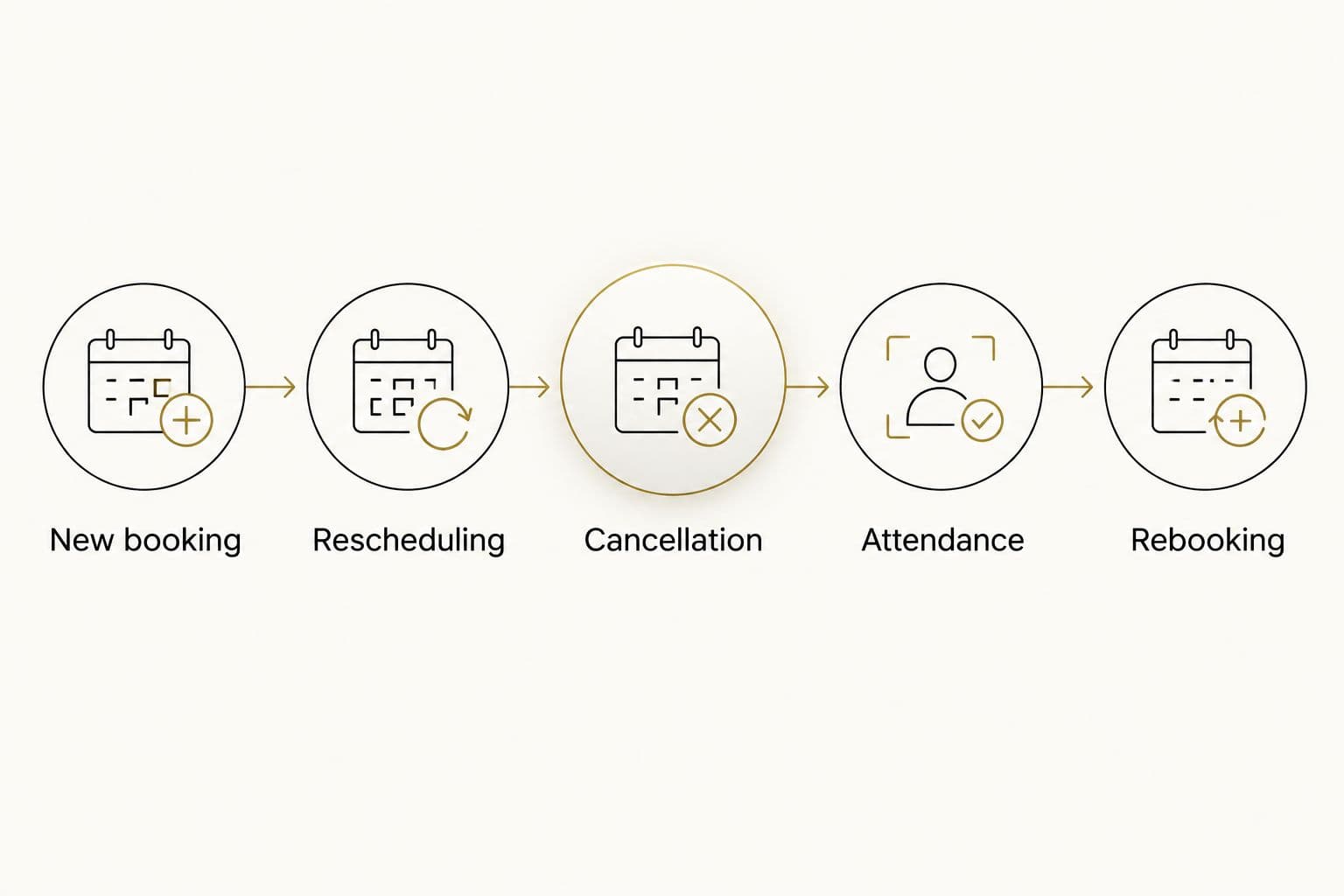
Validate the customer journey and the staff workflow before migrating.
Write down every manual handoff revealed by the test. Assign responsibility before launch, especially where booking, payment and customer records sit in different systems.
For your 2026 migration plan, include 1 complete booking journey from acquisition source to attended appointment. That is more useful than checking whether a booking button opens successfully.
Which wellness scheduling software should you choose?
Choose Acuity Scheduling as the default shortlist leader for an appointment-led wellness studio. Choose Mindbody first when classes and memberships dominate. Choose Vagaro for service-menu evaluation, Square Appointments for payment-centered evaluation and Calendly for consultations only.
The fVnnel’s approach to growth puts the constraint before the channel. Apply that principle here: replacing scheduling software is justified when it addresses a defined booking or operating problem, not when another vendor has a longer feature list.
Keep your selection record short: the problem, the required workflow, the acceptance test and the person accountable for implementation. If the team cannot explain the reason for switching in plain language, stop the migration decision until it can.
FAQ
What’s the best appointment scheduling software for wellness studios?
Acuity Scheduling is the default shortlist leader for wellness studios focused on individual appointments. Mindbody is a better starting point when classes and memberships define the operation.
Is Mindbody better than Acuity Scheduling for a wellness studio?
Mindbody is the stronger starting point for class-led and membership-led operations; Acuity Scheduling is the appointment-led default. Choose using your actual booking model rather than comparing feature totals.
Can I use Calendly to run my wellness studio?
Calendly fits consultation scheduling, not full studio management. Use it for introductory conversations only when you have a separate process for delivering and managing paid services.
Should I choose Square Appointments if I already use Square?
Existing Square use makes Square Appointments worth evaluating, but it does not settle the decision. Test practitioner availability, service booking and payment administration together.
What should I test before switching booking software?
Test a new booking, rescheduling, cancellation, attendance and rebooking. Review the same journey from the customer, reception and practitioner perspectives.
Does wellness scheduling software automatically meet health privacy requirements?
A wellness scheduling label does not establish compliance with applicable health privacy requirements. Check your obligations, the vendor’s current agreements and the way your team will collect and handle information.
Will changing appointment software improve my studio’s marketing results?
Changing software alone does not establish better marketing performance. Define the booking problem first, then measure completed bookings, attendance and subsequent customer activity after implementation.
One last thing
An appointment confirmation is not the business outcome. An attended appointment is closer. Separate bookings from attendance in your reporting so a full calendar does not hide cancellations or missed visits.
Before approving a switch, ask reception to show you the last booking that required manual repair. Use that exact situation in the vendor demonstration. It gives the decision a concrete operating problem to solve.