
Best overall: Mindbody for booking-led retention. Best for points-based loyalty: Vagaro. Best for focused email follow-up: Mailchimp. The best loyalty and retention tools for wellness studios in 2026 depend on why clients stop returning, not which platform has the longest feature list.
TL;DR
- The best loyalty and retention tools for wellness studios address missed visits, membership friction, or weak follow-up.
- Mindbody is the default for booking-led retention; Vagaro fits studios specifically seeking points-based loyalty.
- Mailchimp supports email follow-up, HubSpot supports personal outreach, and SurveyMonkey helps diagnose client dissatisfaction.
- The fVnnel connects retention decisions to customer economics, conversion, and tracking rather than isolated channel metrics.
Why this matters
A studio with established demand needs returning clients, not another dashboard. If clients book an introductory visit but never return, a rewards program addresses a different problem from a clear next-booking message.
At The fVnnel, we treat growth as a connected system: positioning, acquisition, conversion, and tracking. For a wellness studio, retention belongs in that system because repeat visits affect what you can afford to spend acquiring a client.
The commercial measure matters more than the channel report. Kidney Coach’s return on ad spend rose from 1.33 to over 3.8, with profit up roughly 45% while ad spend fell nearly 40%. That is a business result, not a benchmark for wellness studios or evidence for any tool ranked here.
For your 2026 retention plan, identify the break between first purchase and repeat behavior before selecting software. A loyalty tool should support a profitable client relationship, not simply reward transactions that already happen.
What makes the best loyalty and retention tools?
Use these criteria before comparing features. A tool that fails your main requirement should not win because it performs well on an unrelated one.
- Attendance visibility: You need a reliable record of visits before you can identify clients whose attendance has changed.
- Relevant follow-up: Messages should reflect the client’s actual relationship with the studio, not just a mailing-list subscription.
- Operational ownership: Someone must own replies, exceptions, and personal outreach. Automation does not remove that responsibility.
- Commercial measurement: Evaluate repeat purchases, retained membership revenue, and contribution after rewards and delivery costs.
- Data fit: Confirm that booking, consent, payment, and contact information can support the workflow you intend to run.
- Client friction: Booking, redeeming a benefit, or responding to feedback should not create unnecessary work for clients or staff.
The ranking below assigns each tool a different job. It does not treat an email platform, booking system, and survey platform as interchangeable purchases.
Best wellness retention tools at a glance
| Tool | Best for | Standout capability | Key limitation |
|---|---|---|---|
| Mindbody | Booking-led retention | Booking, attendance, and membership management | A booking record does not explain why someone stopped attending |
| Vagaro | Points-based loyalty | Customer rewards tied to qualifying activity | Rewards need clear rules and margin control |
| Mailchimp | Email follow-up | Audience segmentation and email automation | Useful targeting depends on relevant client data |
| HubSpot | Staff-owned relationship follow-up | Contact records and follow-up tasks | Personal outreach requires consistent staff execution |
| SurveyMonkey | Diagnosing client dissatisfaction | Structured surveys and response analysis | Feedback alone does not change the client experience |
Treat this 2026 comparison as a shortlist by function. Confirm the exact feature, plan, and data connection you need before moving client records or rebuilding a working process.
1. Mindbody: best retention tool for booking-led follow-up
Mindbody brings booking and membership management into the same operational environment. For a wellness studio, its value starts with knowing who attended, what they booked, and how their relationship with the studio is structured.
Mindbody is the best default here for studios whose retention problem starts with attendance visibility. Use that record to define who needs attention before deciding how to contact them.
Mindbody pros
- Booking records provide a concrete basis for reviewing attendance.
- Membership management connects repeat visits with an ongoing customer relationship.
- A booking-centered workflow keeps retention decisions close to daily studio operations.
Mindbody cons
- Attendance records show behavior, not the reason behind it.
- Staff still need a clear response when a client’s participation changes.
- Replacing an existing booking system creates migration work that needs its own justification.
Best for: Studios that need booking and membership information to become the foundation of retention work.
Start with a specific question: which clients have stopped following their usual attendance pattern? Then assign the appropriate response, whether that is a scheduling conversation, a booking reminder, or a service-recovery task.
Do not buy a new booking platform solely to send more messages. If your existing system already records attendance accurately, establish the follow-up process first and assess the remaining gap.
Verdict: Buy for a justified booking-system need; hold if attendance data is already reliable and the missing piece is execution.
2. Vagaro: best loyalty tool for points-based rewards
Vagaro combines booking and business-management functions with customer loyalty capabilities. Its points-based approach fits a studio that has already decided what behavior deserves a reward and how redemption should work.
The decision comes before the configuration. Rewarding every purchase without examining the economics can turn a loyalty program into an unnecessary concession to clients who already return.
Vagaro pros
- Points give clients an explicit reward mechanism.
- Booking and customer-management functions place loyalty near the purchase workflow.
- Defined earning and redemption rules give staff a program they can explain consistently.
Vagaro cons
- Rewards reduce the value retained from a transaction unless their effect justifies the concession.
- Complex rules create explanation and administration work.
- Points do not resolve dissatisfaction with scheduling, instruction, or service.
Best for: Studios with a clear rewards proposition and the operational discipline to manage it.
Before adopting Vagaro for loyalty in 2026, write the program in plain language. Specify the qualifying behavior, the benefit, exclusions, and who handles questions or corrections.
Then ask whether clients need an incentive or simply a better reason to return. A missed appointment caused by an unsuitable schedule is not a points problem.
Verdict: Buy when rewards address a defined behavior; skip when the underlying problem is service quality or scheduling.
3. Mailchimp: best retention tool for focused email follow-up
Mailchimp supports audience segmentation and automated email. It fits a studio that needs a repeatable communication process without treating email software as a replacement for its booking system.
A useful retention message has a clear purpose: explain the next step, invite a return visit, or ask for feedback. A general newsletter serves a different job from an attendance-based follow-up.
Mailchimp pros
- Segmentation supports different messages for different client groups.
- Automation supports repeatable follow-up instead of relying entirely on manual sends.
- Email reporting helps assess how recipients respond to messages.
Mailchimp cons
- Booking-aware targeting requires the relevant booking information to reach the email platform.
- Opens and clicks do not establish that clients returned or bought again.
- Automated messages need consent management, exclusions, and ongoing review.
Best for: Studios with a reliable client database and a specific email follow-up gap.
Define the audience before writing the message. Someone who has never attended needs different information from a long-standing member whose attendance has dropped.
Connect campaign evaluation to the booking or purchase outcome you intended. If the objective is a return visit, a stronger open rate is supporting information, not the final result.
Verdict: Buy for a defined communication workflow; hold until the client data needed for targeting is usable.
4. HubSpot: best retention tool for personal follow-up
HubSpot’s customer relationship management software, or CRM, organizes contact information and follow-up work. Its role in this shortlist is accountability: recording who needs a conversation, who owns it, and what happened next.
For a studio with consultations, longer programs, or relationship-led services, personal follow-up deserves a process. An email sequence does not replace a conversation about an unresolved concern.
HubSpot pros
- Contact records give staff a shared place for relationship information.
- Tasks make ownership of follow-up explicit.
- Recorded interactions help staff avoid repeating questions or losing context.
HubSpot cons
- A separate CRM creates another system that needs accurate information.
- Tasks have no effect unless staff complete them.
- Broad access to notes requires careful decisions about what information belongs there.
Best for: Studios where personal conversations influence renewals, program continuation, or service recovery.
Keep the workflow narrow. Record the reason for outreach, assign an owner, and capture the next action. Avoid collecting sensitive wellness information simply because a notes field exists.
If your team will not maintain the record, adding a CRM will not solve the ownership problem. Establish responsibility before building additional fields and pipelines.
Verdict: Buy when relationship follow-up needs accountability; skip when the same task is already handled reliably elsewhere.
5. SurveyMonkey: best retention tool for understanding departures
SurveyMonkey supports structured surveys and response analysis. It belongs in a retention stack when you need to understand the experience behind a cancellation, missed return visit, or declining participation.
Feedback is diagnostic, not corrective. The survey helps identify a problem; the studio still has to decide what changes and who responds.
SurveyMonkey pros
- Structured questions make recurring feedback easier to compare.
- Open responses let clients explain issues outside predefined categories.
- A dedicated survey process separates feedback collection from informal staff impressions.
SurveyMonkey cons
- Respondents do not automatically represent every client who leaves.
- Poorly worded questions produce difficult-to-interpret answers.
- Collecting feedback without acting on it leaves the original problem unresolved.
Best for: Studios that see client loss but cannot explain the reasons from operational records alone.
Ask questions tied to decisions you can make. If scheduling is under review, ask about scheduling rather than relying on a broad satisfaction score to reveal the answer.
Keep responses out of promotional lists unless the relevant permission exists. Clients providing feedback are helping you understand an experience, not automatically asking for another campaign.
Verdict: Buy for a specific diagnostic question; skip recurring surveys that have no owner or action attached.
How we ranked these tools
The ranking follows the criteria above: attendance visibility, relevant follow-up, operational ownership, commercial measurement, data fit, and client friction. Each recommendation addresses a distinct retention job rather than claiming to win every category.
Mindbody comes first because booking and attendance are directly relevant to repeat studio visits. Vagaro follows for an explicit loyalty mechanism, while Mailchimp, HubSpot, and SurveyMonkey address communication, accountability, and diagnosis.
This is a workflow-based buying guide, not a hands-on product test. The fVnnel’s recommendation is to fix the missing connection before adding another platform.
Which retention tool should you choose?
For an undecided studio owner in 2026, start with the booking system you already use. Determine whether the information exists and whether someone acts on it before approving a replacement.
Use this sequence to make the decision:
- Identify the gap: Define the behavior or operational failure you need to change.
- Check existing tools: Determine whether current software already supports the required work.
- Assign ownership: Name the person responsible for messages, replies, exceptions, and follow-up.
- Measure outcomes: Review returning clients and commercial results, not just campaign activity.
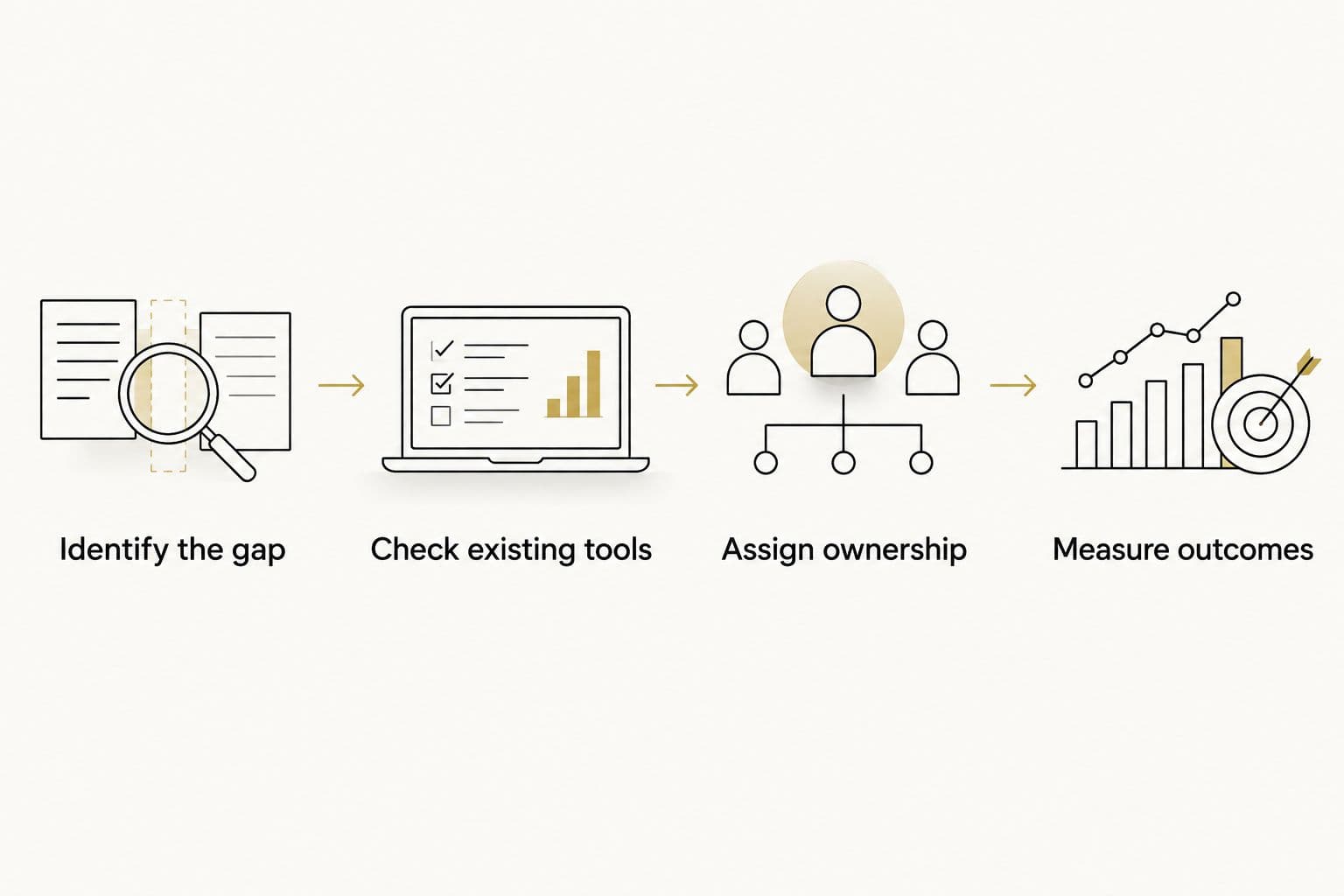
Choose software after defining the missing process and who owns it.
Choose Mindbody when the booking foundation needs replacing, Vagaro when rewards are the specific requirement, and Mailchimp when communication is the gap. Choose HubSpot for accountable personal outreach or SurveyMonkey when you first need to understand the problem.
FAQ
What are the best loyalty and retention tools for wellness studios in 2026?
Mindbody is the default here for booking-led retention, while Vagaro fits points-based loyalty. Mailchimp supports email follow-up, HubSpot supports personal outreach, and SurveyMonkey supports feedback collection.
Should my wellness studio start with a loyalty program?
Start with a loyalty program only when an incentive addresses a defined client behavior. Review attendance, scheduling, and service issues first so rewards do not substitute for fixing the experience.
Is Mindbody better than Mailchimp for retention?
Mindbody and Mailchimp address different retention jobs. Mindbody supports booking and membership operations; Mailchimp supports segmented email communication and automation.
Can I improve retention without changing booking software?
Yes, start by checking whether your existing booking system provides the information your retention process needs. Assign follow-up ownership and identify the remaining limitation before replacing software.
What should I measure beyond email opens?
Measure whether the intended return visit, renewal, or repeat purchase happened. Evaluate the commercial result after accounting for rewards and service delivery costs.
Does a wellness studio need a CRM?
A CRM fits when personal follow-up needs shared records and clear ownership. It adds unnecessary administration when an existing system already handles that work reliably.
How does The fVnnel approach wellness studio retention?
The fVnnel treats wellness studio retention as part of the connected growth system. The starting point is the constraint between the offer, message, channels, conversion, technology, and data, rather than a preferred software purchase.
One last thing
Before adding a retention tool, read the message a lapsed client would receive today. Check whether it acknowledges their situation, offers a useful next step, and reaches someone who can respond.
A workflow that ends at “message sent” is unfinished. Your 2026 retention plan needs ownership of what happens after the client replies.