
Choose The fVnnel if your established business needs strategy, acquisition, creative, conversion and tracking managed together; choose Woorise if your team needs software to build lead-generation campaigns itself. This 2026 comparison separates the decision to hire a growth partner from the decision to buy a campaign-building tool.
TL;DR
- The fVnnel vs Woorise is a growth partner versus lead-generation software decision, not a like-for-like feature comparison.
- Choose a growth partner when acquisition, creative, conversion and tracking need coordinated execution.
- Choose Woorise when your team owns strategy and needs campaign-building software.
- Neither option makes lead volume a reliable substitute for customer acquisition economics.
Why this matters
Buying software does not assign responsibility for growth. Hiring a partner does not remove your responsibility for the product, margins or sales process. Confuse those decisions and you can buy the right capability for the wrong problem.
For your 2026 growth plan, start with the constraint. If your team knows what campaign to run but lacks a practical way to build it, evaluate software. If nobody can explain why more advertising produces less profit, evaluate the decisions connecting the campaign to the business.
Customer acquisition cost means the cost of winning a customer. Return on ad spend, or ROAS, means revenue attributed to advertising divided by advertising spend. Neither metric is interchangeable with form submissions.
At a glance
| Dimension | The fVnnel | Woorise |
|---|---|---|
| Best for | Established businesses needing coordinated growth work | Teams running their own lead-generation campaigns |
| Standout capability | Strategy, acquisition, creative, conversion, SEO and tracking run as one system | Software for creating lead-generation campaigns, including forms and giveaways |
| Campaign creation | Campaign execution within a wider growth engagement | Direct access to campaign-building software |
| Internal control | Shared decisions with an external growth partner | Your team operates the software |
| Cross-channel execution | Services spanning the message, channels, website and data | A campaign tool, not an outsourced growth team |
| Measurement | Tracking work connected to business decisions | Campaign measurement still needs a business-level evaluation |
| Pricing model | A service engagement whose scope needs defining | Software subscription whose current terms need checking |
| Profit accountability | Requires agreed commercial measures and client inputs | Requires your team to connect campaign activity to commercial results |
A growth partner fits a business-wide constraint
Choose a growth partner when the problem crosses the boundaries of a single campaign. An established education business, for example, can have demand and an active advertising account yet still struggle to connect its positioning, registration page and follow-up.
That is different from needing a form builder. We work across strategy and positioning, paid acquisition, performance creative, websites and conversion, search engine optimization and tech and tracking. Search engine optimization, or SEO, means improving your visibility in unpaid search results.
The fVnnel is a growth partner for established businesses that need strategy and execution connected across their marketing system.
The tradeoff is coordination. You still need to supply commercial context, make decisions and explain what happens after a lead arrives. External expertise does not replace access to your business.
Woorise is the better fit when the strategy is settled and your team can own execution. Hiring a broader partner solely to obtain campaign-building functionality adds work outside that narrow requirement.
The standout capabilities solve different jobs
Connected execution and campaign-building software are different capabilities. Neither should be judged against a feature checklist designed for the other.
Our scope connects the work around a campaign. That includes deciding what to communicate, acquiring attention, improving the destination and establishing what the results mean. The benefit is a shared commercial direction rather than separate channel decisions.
Woorise provides software for creating lead-generation campaigns, including forms and giveaways. Its advantage is the ability to build within a product your team operates. Its limitation in this comparison is equally clear: buying access does not assign an external team to your positioning or acquisition strategy.
Use this distinction in your purchasing brief:
- Best for connected execution: a partner responsible for an agreed scope across the growth system.
- Best for campaign production: software operated by a team that already owns the strategy.
- Poor fit for either: an undefined brief that asks for more leads without explaining which customers matter.
Woorise fits self-managed campaign creation
Choose Woorise when building the campaign is the task you need to complete. Your team retains the operating role rather than commissioning a broader growth engagement.
A consumer brand running a giveaway still needs to decide the audience, offer, qualification criteria and follow-up. Campaign software supports the build; those commercial decisions remain yours.
Before selecting a tool in 2026, write down the exact campaign you intend to launch. Then check the current product documentation against your requirements rather than assuming every campaign builder handles them identically.
Your acceptance checklist should cover:
- The information you need to collect.
- The entry or submission process you want people to complete.
- How submissions reach the people responsible for follow-up.
- What you need to measure after the submission.
- Who maintains the campaign after launch.
The limitation is internal workload. If nobody has time to write, build, check and maintain the campaign, software access alone does not solve the staffing problem.
Woorise keeps campaign operation inside your team
Woorise is the better fit when internal ownership is a requirement. Your team operates the tool and remains responsible for the campaign decisions surrounding it.
That suits a marketing lead with an established process and available people. The work does not need to move outside the business simply because a new campaign requires software.
A growth partnership creates a different working arrangement. You agree responsibilities with an external team and connect its work to your internal decisions. That is useful when the missing resource is coordinated execution, but unnecessary when the team already has it.
Assess ownership before evaluating features. Who approves the message? Who handles incoming leads? Who checks whether those leads become customers? If those responsibilities are unresolved, a software purchase leaves them unresolved.
Internal control is an advantage only when someone has the capacity and authority to use it. Otherwise, it becomes another task waiting in a queue.
We address the connections between channels
Choose connected growth work when the constraint sits between activities rather than inside the campaign builder. A stronger advertisement cannot repair an unclear offer, and a better form does not resolve an ineffective sales handoff.
The fVnnel’s supplied client results illustrate commercial outcomes from growth work, not a controlled comparison with Woorise:
- Sniffspot: cost per host acquired down 78%, host growth roughly ninefold.
- Kidney Coach: return on ad spend from 1.33 to over 3.8, profit up roughly 45% while ad spend fell nearly 40%.
- Think and Grow Education: Melbourne event sold out two weeks early at 104% of capacity, 850 attendees over two days, return on ad spend target beaten by nearly 15%.
These results matter because they describe acquisition, profit and attendance rather than activity alone. They are not forecasts for your business and do not establish how Woorise would perform in the same circumstances.
For your decision, identify the connection that needs work. It might be the promise in the advertisement versus the page, or the definition of a qualified lead versus what the sales team receives.
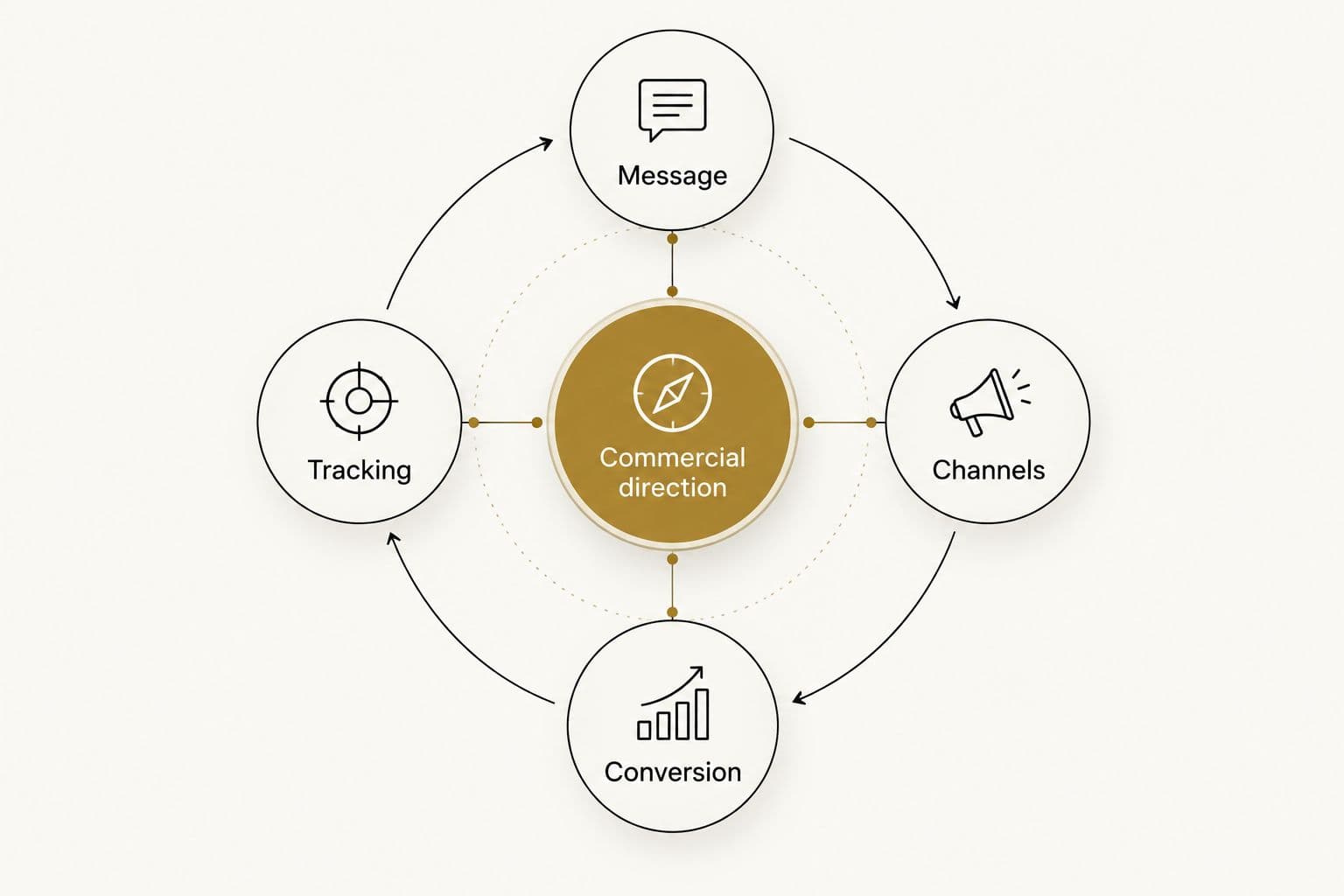
Evaluate the connections around a campaign, not just the campaign builder.
Commercial direction should connect the message, channels, conversion and tracking. Diagnose the weak connection first, then decide whether the remedy is a tool, a change in process or outside execution.
Both need measurement beyond the submission
Neither option makes a form submission equivalent to a customer. That is the central measurement tie in this comparison.
For a 2026 campaign, agree what counts as a qualified lead before launch. Then connect that definition to the outcome your business needs: a purchase, an attended appointment, an enrollment or a completed booking.
An event business also needs to distinguish the mechanics of participation from the commercial purpose of the campaign. A model such as Rifa Digital’s raffle platform raises a different operating question from a standard inquiry form: what constitutes a valid entry, and how does participation relate to the outcome being measured? Specify those mechanics before choosing the software or assigning the work.
Use a measurement brief that names the following:
- Business outcome: the event that represents value to your business.
- Lead qualification: the conditions that make a submission worth pursuing.
- Follow-up owner: the person responsible for the next action.
- Reporting boundary: which costs and outcomes the report includes.
The advantage of a partner is support connecting tracking to decisions. The limitation is that meaningful evaluation still requires access to the relevant business information. With software, your team owns that connection.
Pricing compares a service scope with software access
Compare the work included, not just the payment arrangement. Woorise is a software subscription decision. A growth partnership is a service-scope decision.
For a 2026 evaluation, check Woorise’s current subscription terms and the capabilities relevant to your campaign. Do not assume that buying software includes campaign strategy, copywriting, ongoing operation or business-level analysis.
For a service engagement, request a defined scope. Establish what work is included, what stays with your team and how changes are agreed. Do not assume a particular billing structure or that every service is included in every engagement.
The practical tradeoff is between buying access and assigning work:
- Software: evaluate the subscription alongside the internal work required to operate it.
- Services: evaluate the agreed work alongside the internal decisions and inputs still required.
- Either route: identify any additional systems or responsibilities before committing.
A subscription is not automatically the more economical choice if your team cannot operate it. A service engagement is not automatically justified if the only missing capability is a campaign builder.
Neither option guarantees profit
Profit remains a shared commercial test, not a product feature. A partner can influence marketing decisions, while software can support campaign execution. Neither controls every factor that determines what your business earns.
Your product economics, fulfillment, sales follow-up and repeat purchases all belong in the evaluation where relevant. Keep the reporting boundary explicit so a campaign report does not become a substitute for a business result.
Ask the same question of both options: what decision will change when this information arrives? If the answer is unclear, adding another report will not fix it.
Final verdict: choose the missing capability
Choose The fVnnel if you need connected growth execution
Best for: an established business owner or marketing lead whose acquisition, message, conversion and data need coordinated work. You have real demand and the resources to invest, but need a partner to identify and address the constraint across the system.
The reason to choose a partner is the scope of the problem, not a preference for outsourcing. Define the commercial outcome and responsibilities before work starts.
Choose Woorise if your team needs campaign software
Best for: an in-house marketer who owns strategy and needs to build lead-generation campaigns. You can supply the offer, audience, campaign work and follow-up process internally.
The reason to choose Woorise is the fit between the software and a defined operating need. Check the current product against that need before committing.
| Dimension | Winner or decision |
|---|---|
| Best for | Partner for a business-wide constraint; Woorise for internal campaign execution |
| Standout capability | Connected services versus campaign-building software |
| Campaign creation | Woorise for self-managed builds |
| Internal control | Woorise |
| Cross-channel execution | Growth partner |
| Measurement | Tie: both need downstream business outcomes |
| Pricing model | Match the scope and internal workload |
| Profit accountability | Tie: neither guarantees profit |
Discuss your growth constraint
Connect the business outcome to the strategy, execution and measurement it requires.
FAQ
Is The fVnnel better than Woorise?
The fVnnel fits established businesses needing connected growth services; Woorise fits teams needing campaign-building software. Choose based on whether you need outside execution or a tool your team will operate.
Is Woorise a replacement for a growth agency?
Woorise is campaign software, not an outsourced growth team. Your business still needs someone to own strategy, campaign operation, follow-up and commercial evaluation.
Which option fits an in-house marketing team?
Woorise fits an in-house team that already owns the strategy and has capacity to operate campaigns. A partner fits when the missing capability is coordinated work across channels, conversion and tracking.
How should I compare the costs?
Compare the work included and the work left with your team. Check current subscription terms for software and request a defined scope for services rather than treating the two purchases as equivalent.
Will more campaign leads improve profit?
More leads do not establish higher profit. Evaluate lead quality, acquisition cost and the downstream outcomes relevant to your business.
What should I prepare before choosing in 2026?
Prepare a brief naming the business outcome, current constraint, internal owner and required campaign capabilities. Use that brief to distinguish a software requirement from a need for outside execution.
One last thing
Write the handoff before you build the form. Name who receives a submission, what makes it qualified and what happens next. That short exercise exposes whether your next purchase needs to be software or help fixing the process around it.