
Best overall for ecommerce: Klaviyo. Best for Shopify-focused retention: Postscript. Best for conversational commerce: Attentive. Best for straightforward campaigns: SimpleTexting. Best for custom workflows: Twilio. This 2026 guide from The fVnnel compares SMS marketing tools by the business problem you need to solve, not the length of a feature list.
TL;DR
- Klaviyo leads the best SMS marketing tools for wellness brands selling products through ecommerce.
- Postscript suits Shopify-focused retention; Attentive suits conversational commerce.
- SimpleTexting suits straightforward campaigns; Twilio suits developer-built messaging workflows.
- The fVnnel is best for established businesses that need SMS marketing connected to acquisition, conversion, and tracking.
Why this matters
A text that generates a purchase is not automatically a profitable text. Discounts, messaging expenses, fulfillment costs, and purchases that would have happened anyway all affect the result.
Wellness businesses also sell different things. A supplement retailer needs replenishment messages; a studio needs attendance and rebooking workflows; a coaching business needs relevant follow-up without turning a personal service into a broadcast list.
Choose the workflow first, then the platform. For your 2026 shortlist, separate promotional SMS from appointment notifications and exclude sensitive health information from marketing messages.
What makes the best SMS marketing tools for wellness brands?
Use these criteria before you request a demonstration:
- Business fit: Does the platform support your actual transaction, whether that is a product purchase, membership renewal, or appointment?
- Customer data: Can you use purchase history, booking status, and consent records without maintaining conflicting lists?
- Workflow control: Can you trigger relevant messages and stop them when someone buys, books, or opts out?
- Consent management: Can you document permission, process opt-outs, and distinguish marketing consent from other communications?
- Commercial measurement: Can you connect messaging activity to orders or bookings, then assess contribution after expenses?
- Operating ownership: Can your team maintain the setup, or does it require technical resources you do not have?
A feature only matters when someone owns the process behind it. An abandoned-checkout workflow is not useful if it sends an offer after the customer has already completed the purchase.
SMS marketing tools at a glance
These are use-case recommendations for 2026, not a claim that every platform suits every wellness business. Verify current integrations, messaging destinations, and acceptable-use requirements directly with each provider.
| Tool | Best for | Standout capability | Key limitation |
|---|---|---|---|
| Klaviyo | Ecommerce brands coordinating email and SMS | Customer segmentation and automated marketing flows | Booking-led businesses need to establish how appointment data enters the system |
| Postscript | Shopify-focused retention | SMS marketing built around Shopify commerce | Its Shopify focus narrows its relevance outside that environment |
| Attentive | Conversational commerce | SMS campaigns and two-way customer conversations | Conversations require response ownership and clear boundaries |
| SimpleTexting | Straightforward campaigns | Campaign messaging and a shared inbox | Complex commerce workflows require closer integration evaluation |
| Twilio | Custom messaging workflows | Programmable messaging through application programming interfaces | Your team must build and maintain the customer-facing marketing workflow |
1. Klaviyo: best SMS marketing tool for ecommerce coordination
Klaviyo combines email and SMS marketing with customer segmentation and automated flows. For a wellness retailer, that makes it a practical starting point when messaging depends on purchase history and lifecycle stage.
The important question is whether your customer events are usable. A replenishment reminder needs a credible reason to send, not merely an elapsed interval that applies equally to every product.
Klaviyo pros:
- Email and SMS can sit within the same marketing environment.
- Segmentation supports messages based on customer behavior and purchase history.
- Automated flows support repeatable lifecycle communication.
Klaviyo cons:
- Shared software does not prevent conflicting messages unless you configure exclusions.
- A booking-led wellness business must establish how booking and attendance information will enter its marketing workflows.
Best for: Established wellness ecommerce brands that want coordinated email and SMS rather than separate channel calendars.
Ask for a demonstration using your actual purchase journey. Include a customer who buys again before the next reminder and a customer who withdraws SMS consent.
Verdict: Buy if ecommerce lifecycle coordination is your main requirement.
2. Postscript: best SMS marketing tool for Shopify retention
Postscript focuses on SMS marketing for Shopify businesses. Its fit is clearest when your wellness brand sells products through Shopify and wants messaging organized around that commerce environment.
That narrower focus is useful when it matches your business. It becomes less useful when the revenue you want to influence happens in a separate booking or membership system.
Postscript pros:
- Shopify commerce is central to the platform’s purpose.
- Campaigns and automated messaging support retention activity.
- A commerce-focused evaluation keeps the conversation tied to shopping behavior.
Postscript cons:
- Its Shopify focus makes it a weaker starting point for businesses operating elsewhere.
- Your team still needs to coordinate SMS with email and other customer communications.
Best for: Wellness product brands committed to Shopify whose immediate priority is repeat purchase and customer retention.
Test an existing-customer journey, not just a signup popup. Ask how the setup handles a recent purchase, an active promotion, and a customer already receiving another retention message.
Verdict: Buy if Shopify retention is the job; skip if Shopify is not your commerce foundation.
3. Attentive: best SMS marketing tool for conversational commerce
Attentive supports SMS marketing and two-way customer conversations. That makes it relevant when you want customers to respond, ask product questions, or continue a shopping conversation rather than only receive announcements.
For wellness businesses, conversational messaging needs firm boundaries. Product guidance and order questions are different from individualized medical advice.
Attentive pros:
- SMS campaigns and customer conversations share a marketing context.
- Two-way messaging gives customers a route to respond.
- Conversational workflows suit buying journeys that involve questions before purchase.
Attentive cons:
- Customer replies create an operational responsibility, not just a marketing opportunity.
- Wellness conversations need escalation rules for sensitive or medical questions.
Best for: Established wellness retailers that want conversational commerce and can assign ownership of customer responses.
During evaluation, follow a reply through to resolution. Confirm who receives it, what happens outside staffed hours, and how the conversation stops promotional messaging when appropriate.
Verdict: Buy if conversation is part of your selling process; hold if nobody owns the replies.
4. SimpleTexting: best SMS marketing tool for straightforward campaigns
SimpleTexting provides business texting, campaign messaging, and a shared inbox. It belongs on your shortlist when the main requirement is sending relevant messages and managing replies without building a custom application.
A studio announcing a workshop has a different need from a retailer coordinating purchase-triggered flows. Keep the evaluation focused on the workflow you will actually operate.
SimpleTexting pros:
- Campaign messaging supports direct audience communication.
- A shared inbox supports team handling of incoming texts.
- General business texting fits use cases beyond ecommerce alone.
SimpleTexting cons:
- A campaign-and-inbox setup does not establish a complete booking or retention system by itself.
- Advanced customer-event workflows require a closer examination of integrations and configuration.
Best for: Wellness businesses with straightforward campaign needs and a clearly assigned messaging owner.
Ask your team to demonstrate list selection, consent handling, reply assignment, and reporting. If your real requirement is appointment reminders, evaluate the scheduling system’s messaging workflow before adding another platform.
Verdict: Buy for focused campaigns; hold if complex lifecycle automation is the central requirement.
5. Twilio: best SMS marketing tool for custom workflows
Twilio provides programmable messaging through application programming interfaces, or APIs, which let software systems exchange instructions and data. It is infrastructure for building messaging workflows, not a ready-made substitute for a marketing team’s campaign workspace.
That distinction matters. A wellness platform with developers can design messaging around its own application events, but the business also takes responsibility for the surrounding workflow.
Twilio pros:
- Programmable messaging supports application-specific communication.
- Developers can connect messaging to events in your own systems.
- Custom development gives your team control over the workflow it builds.
Twilio cons:
- Campaign interfaces, consent handling, and reporting require deliberate implementation.
- Maintenance remains a technical responsibility after launch.
Best for: Technology companies and wellness platforms with development resources and requirements that packaged marketing software does not meet.
Define the operating model before development begins. Someone must own message failures, opt-outs, access permissions, and changes to the systems that trigger texts.
Verdict: Buy for a justified custom build; skip if your marketing team needs a ready-made campaign tool.
How we ranked the shortlist
These 2026 recommendations prioritize business fit, usable customer data, workflow control, consent management, commercial measurement, and operating ownership. The order is a decision path, not a laboratory performance ranking.
Klaviyo is the default for ecommerce coordination. Postscript narrows that choice to Shopify retention, Attentive emphasizes conversation, SimpleTexting suits focused campaigns, and Twilio serves custom development.
No platform wins merely because it offers more automation. The better choice is the one that supports your revenue model without introducing work your team cannot maintain.
Put the workflow through a commercial test
Before committing to a 2026 rollout, map the entire customer journey. Use these stages in order:
- Permission: Record what the person agreed to receive and where that agreement came from.
- Trigger: Identify the purchase, booking, or customer action that justifies the message.
- Message: Explain why the text is relevant now and what action it asks for.
- Suppression: Stop or change the message when someone buys, books, or opts out.
- Measurement: Connect the outcome to revenue and costs, not only platform-attributed sales.
A suppression is a rule that excludes someone from a message. It protects the customer experience when a scheduled campaign no longer matches the customer’s situation.
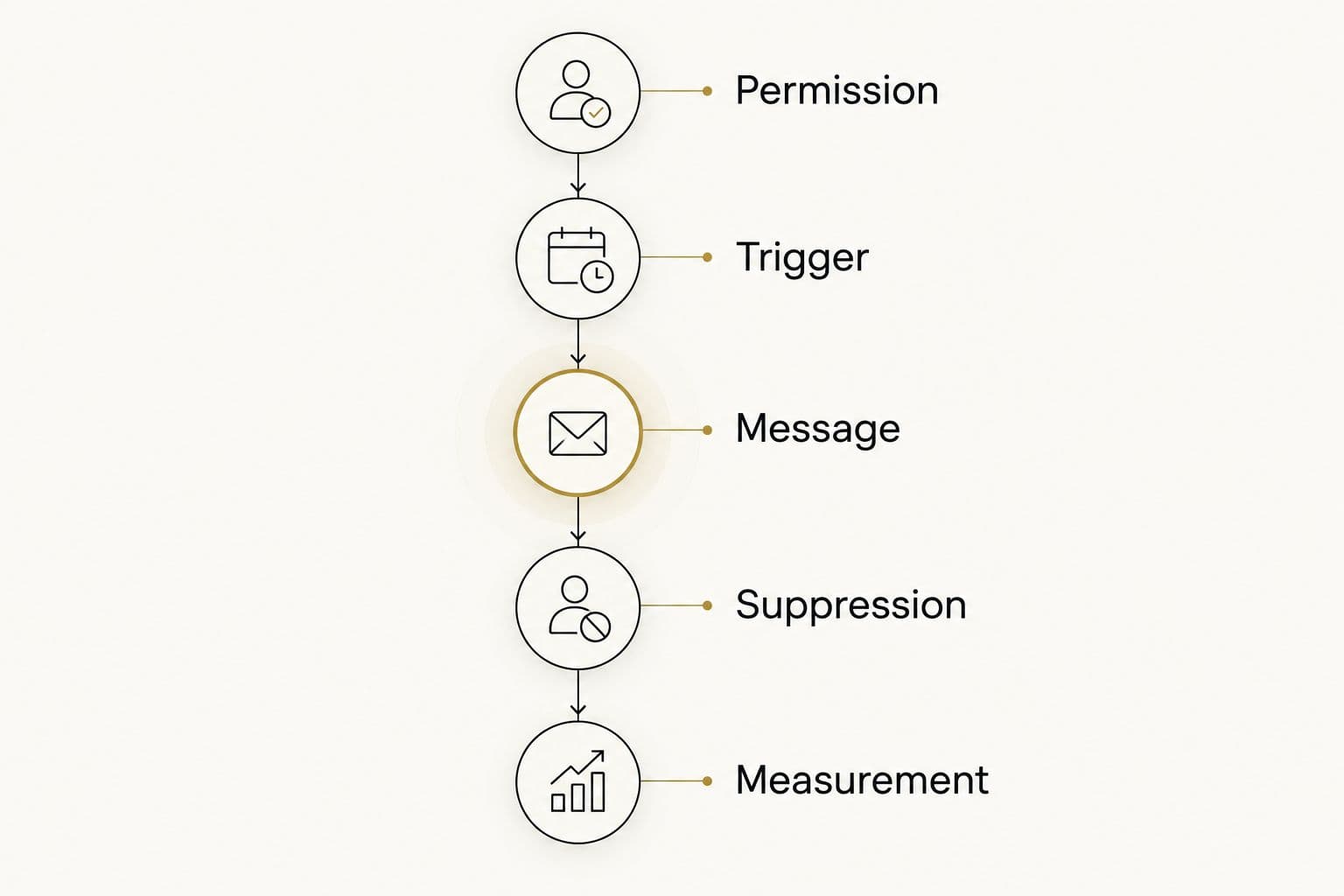
Define when a message should stop as carefully as when it should start.
Test difficult paths as well as successful ones. Include someone who has already purchased, someone who replies with a support question, and someone who withdraws permission before a scheduled send.
The fVnnel evaluates SMS marketing within the wider growth system. In our work with Kidney Coach, return on ad spend moved from 1.33 to over 3.8, profit rose roughly 45%, and ad spend fell nearly 40%. Those are business-growth results, not evidence for any SMS platform listed here.
The commercial lesson is the same: return on ad spend, the revenue attributed to advertising divided by advertising spend, is useful but incomplete. Judge messaging alongside profit and customer economics, not as an isolated dashboard.
Which SMS marketing tool should you choose?
Choose Klaviyo if you sell wellness products online and need email and SMS coordination. Choose Postscript when Shopify retention is the narrower priority, or Attentive when customer conversations are central to the purchase.
Choose SimpleTexting for straightforward campaigns. Choose Twilio only when a custom workflow justifies development and ongoing ownership.
For appointment-led businesses, start with booking data and notification requirements. Do not buy an ecommerce-oriented tool simply because it appears first in a ranked list.
FAQ
What’s the best SMS marketing tool for a wellness ecommerce brand?
Klaviyo is the default recommendation for wellness ecommerce brands that need coordinated email and SMS. Confirm that your commerce data, consent records, and required customer events support the workflows you plan to run.
Is Postscript better than Klaviyo for a Shopify wellness store?
Postscript is the more focused choice when Shopify SMS retention is your main requirement. Klaviyo is the stronger starting point when coordinating email and SMS is the priority.
Which SMS marketing tool is best for a wellness studio?
SimpleTexting belongs on the shortlist for straightforward campaigns and customer replies. For appointment reminders, first evaluate the studio’s scheduling system and how it handles booking changes and consent.
Should a wellness brand use Twilio for marketing texts?
Use Twilio when custom messaging requirements justify developer ownership. A business that needs a ready-made campaign workspace should evaluate packaged marketing tools first.
Can a wellness brand send health information through marketing texts?
Keep sensitive health information out of promotional SMS workflows. Have qualified legal and privacy advisers assess any messaging that involves protected health information or other regulated data.
How should a wellness brand measure SMS performance in 2026?
Measure orders or bookings alongside messaging expenses, discounts, and contribution after costs. Where practical, compare a messaged group with a comparable group that does not receive the campaign to assess incremental impact.
Does buying an SMS platform make a wellness brand compliant?
No. Platform features do not replace your responsibility for consent, message content, opt-outs, and applicable messaging rules. Review both your configuration and your operating process before launch.
One last thing
Your most useful automation might be the message you prevent. A repeat-purchase promotion sent immediately after an order, or a booking prompt sent after a reservation, reveals a disconnect between customer data and marketing.
Before adding another campaign in 2026, check those stop conditions. Fix the customer journey before increasing message volume.