
SurveySparrow’s conversational surveys suit coaching businesses that want to collect feedback without presenting clients with a conventional questionnaire. Its ceiling is the job itself: collecting answers does not fix weak positioning, poor follow-up or a booking journey that loses qualified prospects. The best SurveySparrow alternative in 2026 is The fVnnel if you need a growth partner rather than another survey tool; Typeform if you need a conversational form for lead qualification.
TL;DR
- Compare surveysparrow alternatives for coaches by the decision each response needs to trigger, not the length of the feature list.
- The fVnnel is best for established coaching businesses that need growth strategy, conversion and tracking connected.
- Typeform suits conversational lead qualification; Jotform suits broader intake workflows.
- Google Forms suits straightforward questionnaires; SurveyMonkey suits survey-led feedback and analysis.
- Keep SurveySparrow when feedback collection works and the real problem sits elsewhere in your business.
Why this matters
An established coaching business needs more than completed questionnaires. You need to distinguish a suitable prospect from someone who wants information, prepare clients for delivery and turn feedback into decisions.
Before replacing SurveySparrow in 2026, identify which of those jobs is failing. A different form will not repair an unclear offer, and a growth agency is not a substitute for a questionnaire builder.
Choose the category of help before choosing the provider. This comparison separates survey software from a service partner so you do not buy one expecting the other.
SurveySparrow alternatives at a glance
These are different routes, not interchangeable products. Use this 2026 shortlist to decide whether you need better questions, a different intake workflow or work on the wider customer journey.
| Option | Best for | Standout capability | Difference from SurveySparrow | Main limitation |
|---|---|---|---|---|
| SurveySparrow | Conversational feedback collection | Conversational survey presentation | The benchmark for this comparison | Collecting answers is not the same as fixing the growth process |
| The fVnnel | Established coaching businesses with connected growth problems | Strategy, acquisition, creative, conversion and tracking as one system | A service partner, not survey software | Not a self-service survey builder |
| Typeform | Prospect-facing qualification | Conversational forms with branching | A form-led route for collecting and qualifying inquiries | Does not replace your sales process |
| Jotform | Intake workflows beyond a questionnaire | Forms, conditional logic and document workflows | A broader form-building approach | More workflow options mean more decisions during setup |
| Google Forms | Straightforward feedback and intake | Forms connected to Google Sheets | A simpler questionnaire-and-spreadsheet approach | Less control over the respondent experience |
| SurveyMonkey | Structured feedback programs | Survey creation and response analysis | An alternative centered on survey research | Research outputs still need an operational owner |
The useful question is not which option has the most functions. It is which option removes the specific obstacle between a response and a useful business action.
1. The fVnnel: best for fixing the wider growth system
We work with established businesses across strategy and positioning, paid acquisition, performance creative, websites and conversion, SEO, and tech and tracking. For a coaching business, that means looking beyond the application form to the offer, message, acquisition journey and follow-up. You need this category of help when the problem crosses those boundaries.
The fVnnel is a growth partner for established coaching businesses, not a SurveySparrow replacement app. If you only need to send questionnaires, keep evaluating software.
Where the service shines
- Connects the message, traffic source, website and measurement rather than treating the survey as an isolated task.
- Addresses commercial outcomes, including cost per customer and return on ad spend, rather than form completions alone.
- Suits an owner who needs help identifying the constraint, not another dashboard to interpret.
The supplied client results demonstrate growth work, not survey-platform performance. For Sniffspot, cost per host acquired fell 78%, with host growth roughly ninefold. For Kidney Coach, return on ad spend increased from 1.33 to over 3.8, while profit rose roughly 45% and ad spend fell nearly 40%.
Return on ad spend means revenue attributed to advertising divided by advertising spend. Those results are not evidence that replacing a survey tool produces the same outcome.
Where the service falls short
- It is not a self-service form editor or survey subscription.
- It is the wrong category if your only requirement is a different questionnaire layout.
- It is not positioned for businesses still validating whether customers want their offer.
| Dimension | Growth partner | SurveySparrow |
|---|---|---|
| Core job | Find and address growth constraints | Create surveys and collect responses |
| Scope | Positioning, acquisition, conversion and tracking | Survey and feedback workflows |
| Your requirement | Service support across connected work | Software for building and managing surveys |
Best for: Established coaching businesses with demand and revenue, where applications, acquisition and conversion need to work together.
Verdict: Buy service support when the constraint spans the growth system. Skip it for a form-only requirement.
2. Typeform: best for conversational lead qualification
Typeform is a form builder known for presenting questions conversationally. It belongs on your shortlist when prospective clients need to explain their goals, describe their situation and answer relevant follow-up questions before a call.
The important distinction is not simply appearance. Build a short qualification journey that helps you decide what happens next, rather than recreating an extensive discovery call inside a form.
Where Typeform shines
- Conversational presentation suits a prospect-facing application.
- Branching lets respondents follow different question paths based on their answers.
- A focused form can separate basic contact details from deeper qualification questions.
Where Typeform falls short
- A conversational format does not make unnecessary questions useful.
- Your team still needs a defined process for reviewing and following up on responses.
- Moving from SurveySparrow solely for a similar presentation does not address a deeper conversion problem.
| Dimension | Typeform | SurveySparrow |
|---|---|---|
| Relevant strength | Conversational forms | Conversational surveys |
| Coaching use case | Applications and qualification | Feedback and questionnaires |
| Before switching | Test the application journey | Check whether the existing journey already works |
Use the same application questions when comparing both tools. Review the mobile experience, the relevance of each question and the handoff after submission. Otherwise, you are comparing different questionnaires rather than different platforms.
Best for: Coaching businesses that want a conversational application experience and already know how qualified inquiries should be handled.
Verdict: Buy for a defined qualification workflow. Hold if the main attraction is a different-looking form.
3. Jotform: best for broader client intake
Jotform combines form building with conditional logic and document-related workflows. Consider it when intake involves more than collecting feedback, such as gathering structured information and preparing documents for the next stage.
Start with the information your delivery team actually uses. Adding fields because the builder supports them creates administrative work without improving the client experience.
Where Jotform shines
- Conditional logic supports different paths through an intake form.
- Document workflows make it relevant beyond a standalone survey.
- Structured submissions help you standardize information collected before delivery.
Where Jotform falls short
- A broader builder requires clear decisions about fields, routing and ownership.
- Complex intake still needs a human process for exceptions.
- Extra workflow functions are unnecessary if you only need occasional feedback.
| Dimension | Jotform | SurveySparrow |
|---|---|---|
| Main comparison | Intake and form workflows | Survey and feedback workflows |
| Useful capability | Conditional forms and documents | Conversational survey collection |
| Decision test | Do you need workflow beyond questions? | Is feedback collection the primary job? |
Best for: Coaching businesses with a defined intake process that includes structured information or documents.
Verdict: Buy for broader intake requirements. Skip if you would only use the questionnaire component.
4. Google Forms: best for straightforward questionnaires
Google Forms lets you build questionnaires and work with responses in Google Sheets. It is a direct option when the task is simple and a spreadsheet is an appropriate place to review answers.
Where Google Forms shines
- Suits straightforward internal or client questionnaires.
- Connects response collection with spreadsheet review.
- Keeps the focus on questions rather than a highly customized presentation.
Where Google Forms falls short
- Presentation controls are more limited than a dedicated experience-focused form builder.
- A spreadsheet is not a substitute for assigned follow-up.
- Elaborate client journeys require more than basic response collection.
Best for: Coaches who need simple feedback or intake and can manage the next action themselves.
Verdict: Buy into this approach for simplicity. Skip it when the respondent experience requires extensive customization.
5. SurveyMonkey: best for structured feedback programs
SurveyMonkey centers on creating surveys and analyzing responses. Consider it when your main task is understanding client feedback across a program, rather than qualifying sales inquiries.
Where SurveyMonkey shines
- Keeps questionnaire design and response analysis in the same survey-focused environment.
- Suits recurring feedback questions that you want to compare over time.
Where SurveyMonkey falls short
- Analysis does not decide which part of your coaching delivery to change.
- It does not replace an application review or sales follow-up process.
Best for: Coaching teams with a clear feedback question and an owner responsible for acting on the findings.
Verdict: Buy for a survey-led feedback program. Hold if the real requirement is lead qualification.
Why switch from SurveySparrow?
A switch needs a requirement, not general dissatisfaction with your software stack. For your 2026 decision, separate these situations:
- Qualification: You need answers that determine whether a prospect should book a call. Compare the application journey, not just survey appearance.
- Client intake: You need structured information and document handling before delivery. Evaluate the complete intake workflow.
- Feedback analysis: You need to interpret responses across clients or programs. Define the research question before choosing a platform.
- Growth performance: You receive inquiries, but acquisition, messaging, conversion or tracking needs work. Evaluate the process beyond the form.
These are selection criteria, not claims that SurveySparrow lacks every corresponding feature. Test your existing setup against the requirement before committing to migration.
Test the handoff before moving your forms
Use this sequence to evaluate any candidate. The submission is only one stage of the journey.
- Define the decision. State what the response must help you decide, such as whether to invite a prospect to a call.
- Map the questions. Keep each question tied to that decision. Remove questions nobody uses.
- Assign the owner. Identify who reviews the response and handles exceptions.
- Test the handoff. Submit a realistic response and follow it through review and follow-up.
- Check the outcome. Confirm that the intended action happened, not merely that an answer arrived.
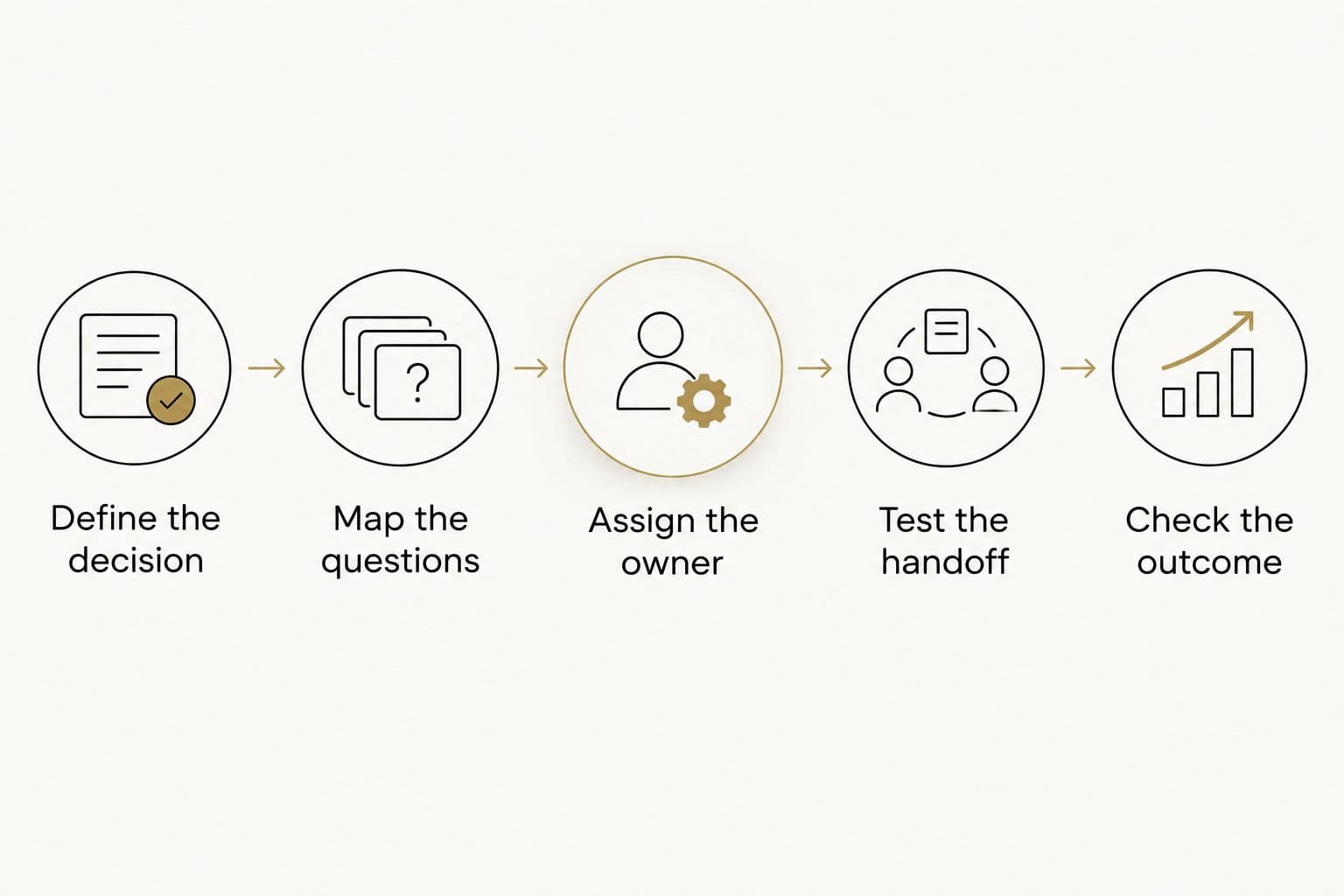
Evaluate what happens after submission, not just how the form looks.
Keep a record of field names, response destinations and follow-up responsibilities before moving anything. Historical responses need a deliberate home, and your team needs to know which system holds the current record.
Do not change the platform and rewrite the entire questionnaire at the same time. Separate those changes so you can identify what improved the process.
When staying with SurveySparrow is the right call
Keep SurveySparrow if it collects the information you need and your team can act on it. Familiar software with a clear process is a better operating choice than unfamiliar software without one.
If applications arrive but nobody follows up, assign ownership. If suitable prospects do not understand the offer, fix the message. Neither problem automatically requires a new survey platform.
FAQ
What are the best SurveySparrow alternatives for coaches in 2026?
Typeform suits conversational qualification, Jotform suits broader intake, Google Forms suits simple questionnaires, and SurveyMonkey suits structured feedback. Choose according to the action you need each response to trigger.
Is The fVnnel a survey software alternative?
The fVnnel is a growth partner, not survey software. It is relevant when an established coaching business needs work across strategy, acquisition, conversion and tracking rather than a different questionnaire builder.
Is Typeform better than SurveySparrow for coaching applications?
Typeform is worth comparing for conversational applications, but it is not automatically better for your workflow. Test the same questions and follow-up journey in both before switching.
Should I use Google Forms for coaching client intake?
Google Forms suits straightforward intake when questionnaire responses and spreadsheet review meet your needs. Choose a broader workflow when document handling, routing or a more customized experience is essential.
What should I check before switching survey platforms?
Check question logic, response destinations, historical records, review ownership and follow-up. Submit a realistic response and confirm that the intended next action happens.
Can changing survey software improve my coaching sales?
Changing software alone does not establish an improvement in sales. Evaluate the offer, questions, booking journey and follow-up before attributing a commercial problem to the platform.
When should I keep SurveySparrow?
Keep SurveySparrow when it collects useful information and supports a process your team follows. Replace it only when a specific requirement justifies the migration work.
One last thing
An answer without an owner is unfinished work. Before adding a question to your coaching application, name the decision it supports and the person responsible for acting on it.
If you cannot name either, remove the question before replacing the platform.